

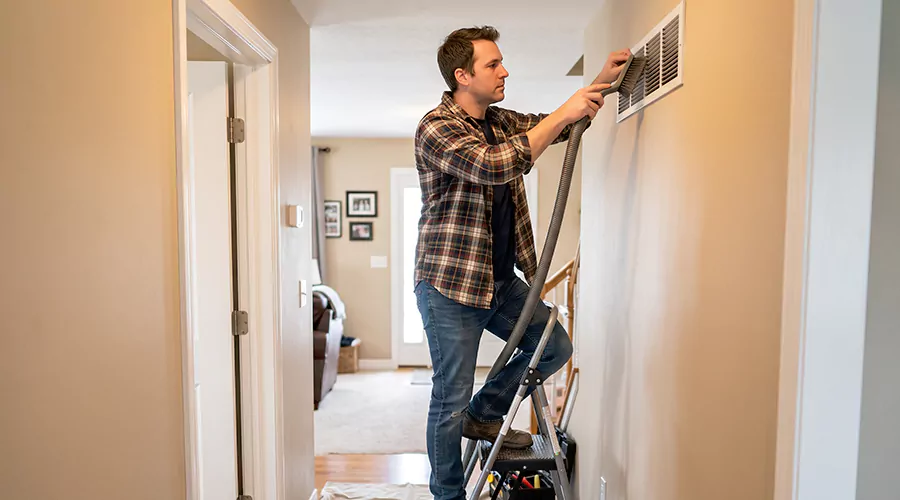
You can clean air vents by switching off the HVAC system, vacuuming the vent covers, removing accessible dust, and wiping washable grilles with mild soapy water. Floor, wall, and ceiling vents can usually be maintained with basic household tools. Residential air vent cleaning helps maintain these visible openings and remove accumulated dust, but cleaning the visible openings is different from cleaning the entire air duct system behind them.
Air vents collect dust because air moves through their openings whenever the heating or cooling system operates. Supply vents deliver conditioned air into rooms, while return vents draw room air back toward the HVAC equipment. Dust can settle on both types, although return grilles may appear dirtier because they collect particles from air moving toward the filter.
Regular cleaning removes visible buildup and keeps the openings free from accumulated debris. It also provides an opportunity to check for damaged grilles or signs of moisture around the openings. The process should remain gentle because aggressive cleaning can damage adjustable louvers or disturb insulation inside the duct.
Most homeowners can clean ordinary vent covers without professional equipment. The important distinction is knowing how far household cleaning should extend. A vacuum and cloth can clean accessible surfaces, but significant contamination inside concealed ductwork requires a different approach.
What Causes Air Vents to Get Dirty?
Air vents become dirty when airborne particles collect around the openings. Household dust includes fibers, skin particles, tracked-in dirt, and other material released during normal activities. Air movement and the shape of the grille influence where these particles accumulate.
Dust Circulating Through the Home
Dust is present in indoor air even when a home is cleaned frequently. Walking across carpets, using upholstered furniture, and opening exterior doors can release small particles into the room. Some of these particles settle on vent covers as air passes through the openings.
Return grilles often develop particularly visible deposits because room air moves toward them. Dust can collect along the edges and narrow spaces between the grille bars. The presence of ordinary dust does not automatically mean that the ducts behind the grille are heavily contaminated.
Dirty or Poorly Fitted HVAC Filters
An HVAC filter captures particles carried by air returning to the equipment. When the filter is overloaded or does not fit correctly, unwanted particles may pass into downstream components. This can contribute to dust accumulation within parts of the system.
However, a dusty return grille is not proof that the filter has failed. Much of the material may be collecting before the air reaches the filter. Checking the filter's condition and fit provides a better understanding of whether filtration needs attention.
Pet Hair and Fabric Fibers
Homes with pets may experience additional hair and dander collecting near return openings. Fabric fibers released from clothing and furnishings can also settle on grilles. The amount depends on household activity and how often nearby surfaces are cleaned.
Vent covers with narrow slots can hold this material more visibly than wider openings. Vacuuming the grille during ordinary housekeeping helps prevent thick deposits from accumulating. Persistent debris inside the duct should be evaluated separately from surface dust.
Construction or Renovation Dust
Home renovation activities can release substantial quantities of fine dust. Drywall sanding and cutting building materials are common sources. If the HVAC system operates during dusty work, particles may collect around the vents or enter unprotected duct openings.
Cleaning the covers after a renovation can remove visible deposits. However, if large quantities of construction debris entered the ducts, the connected system may require inspection. Washing the grilles alone will not remove material trapped deeper inside.
Moisture and Condensation
Cooling vents can sometimes develop condensation when humid indoor air contacts a cold grille or nearby duct boot. Dust may adhere more easily to damp surfaces, creating dark deposits around the opening. Repeated moisture can also affect paint and surrounding drywall.
This condition needs more attention than ordinary dry dust. The moisture source may involve indoor humidity or damaged insulation around a cold duct. Cleaning the stain without correcting recurring condensation can allow the problem to return.
How Often Should You Clean Air Vents?
Air vent covers can be vacuumed during regular household cleaning and washed more thoroughly when visible deposits accumulate. For many homes, checking them monthly and performing a more detailed cleaning every three to six months is a practical starting point. The schedule should reflect actual dust buildup rather than an inflexible requirement.
Return grilles may need more frequent attention because their surfaces collect particles from room air. Floor vents can also gather dirt or pet hair that falls through the opening. Ceiling vents may stay relatively clean for longer periods, depending on the household.
This schedule applies to accessible grille maintenance, not professional cleaning of the entire duct system. The Environmental Protection Agency does not recommend routine internal duct cleaning on a fixed timetable. Professional service should be considered when specific contamination warrants it.
What Tools Do You Need to Clean Air Vents?
Ordinary vent covers usually require only household cleaning supplies. Soft tools are preferable because they remove dust without scratching painted surfaces or bending metal louvers. The type of grille determines whether it can be washed or should be cleaned in place.
| Cleaning Tool | Main Purpose |
|---|---|
| Vacuum with brush attachment | Collects loose dust from grille surfaces |
| Microfiber cloth | Wipes remaining deposits |
| Soft-bristled brush | Reaches between narrow slots |
| Mild dish detergent | Cleans washable covers |
| Warm water | Removes suitable surface grime |
| Small screwdriver | Removes accessible grille fasteners |
| Flashlight | Inspects the nearby opening |
| Stable step stool | Provides safe access to elevated vents |
Avoid stiff wire brushes and sharp tools that can damage grille finishes. Also avoid spraying cleaning liquids into duct openings. Moisture may reach insulation or concealed building materials that are not designed to become wet.
If a vent contains electrical components or belongs to a specialized ventilation unit, follow the manufacturer's cleaning instructions. Ordinary HVAC grille cleaning methods should not automatically be applied to every type of vent.
How to Clean Air Vents Step by Step?
Cleaning an ordinary HVAC vent involves removing accessible dust and washing the cover when its material permits. The process should leave the grille clean and correctly installed without changing its airflow setting. It should not involve aggressive brushing deep inside the duct.
Step 1. Turn Off the Heating or Cooling System
Switch off the HVAC system at the thermostat and wait until the blower stops. This prevents air from moving through the opening while loose dust is being removed. It also makes cleaning easier because particles are less likely to be disturbed by operating airflow.
Make sure the vent can be reached safely before beginning. Ceiling vents may require a stable step stool, while floor grilles should be approached carefully to avoid damaging their surrounding surface. Do not attempt to reach a high opening by standing on unstable furniture.
Step 2. Vacuum the Exterior Grille
Use a vacuum brush attachment to collect dust from the visible cover. Move slowly across the louvers and edges where particles tend to settle. A soft brush attachment helps remove material without scraping the finish.
If the grille contains thick dust, vacuum it before wiping with a damp cloth. Otherwise, the moisture may turn the loose material into a paste that is harder to remove. Cleaning the dry deposits first generally makes the remaining work easier.
Step 3. Remove the Cover if Appropriate
Some vent covers are held in place by screws, while others lift out of the opening. Remove the cover only when it can be detached safely without disturbing nearby electrical wiring or duct insulation. Keep the fasteners together so they are available during reinstallation.
A ceiling grille may be more difficult to support while removing screws. Use an appropriate working position and avoid letting the cover fall. If it cannot be removed safely, clean its accessible surfaces while it remains installed.
Step 4. Inspect the Visible Opening
Use a flashlight to examine the area immediately behind the grille. Look for loose household debris or dust near the opening. Avoid reaching deep into the duct or inserting sharp tools where concealed materials cannot be seen.
A small amount of dust near the entrance is not necessarily a reason to clean the entire system. If substantial debris appears farther inside, document it before attempting more work. The condition may justify inspection by a qualified HVAC cleaning provider.
Step 5. Vacuum Accessible Dust
Use a suitable vacuum attachment to collect loose particles from the exposed edges and immediately accessible opening. Keep the attachment within the area that can be safely seen and reached. Do not force a rigid hose through a bend or into flexible duct material.
If the visible duct contains torn insulation or unusual contamination, stop before disturbing it. Aggressive household vacuuming can damage duct liners or release particles into the room. The appropriate response depends on the material and type of contamination.
Step 6. Wash Compatible Vent Covers
For removable metal or plastic grilles that permit washing, prepare warm water with a small amount of mild dish detergent. Use a soft cloth or brush to remove deposits from the surface and between the louvers. Avoid abrasive cleaners that may damage painted or plated finishes.
Not every grille should be submerged in water. Covers containing wood, electronic components, or moisture-sensitive coatings may require dry cleaning or careful wiping. Follow the manufacturer's instructions whenever available.
Step 7. Dry the Cover Completely
After washing, rinse when appropriate and allow the grille to dry completely. Water trapped in narrow joints can affect metal finishes or drip onto surrounding building materials. Drying is particularly important before reinstalling a cover in a ceiling opening.
Check that the louvers move freely after cleaning. Dirt should be removed without bending the adjustable parts. A damaged grille may require replacement if its airflow controls no longer function.
Step 8. Clean the Surrounding Surface
Wipe dust from the nearby wall, ceiling, or floor using a cleaning method compatible with the finish. Dark deposits around a grille may be ordinary dust attracted by airflow patterns. Removing them can improve appearance, but the cause should be investigated when staining quickly returns.
If the surrounding surface is damp or repeatedly discolored, check for condensation or water intrusion. Cleaning alone will not solve a persistent moisture problem. Wet drywall or insulation may require a separate assessment.
Step 9. Reinstall the Vent Cover
Return the grille to its original position and secure it with the appropriate fasteners. Avoid overtightening screws because they can damage drywall anchors or deform a thin metal cover. Confirm that any adjustable louvers remain in their intended position.
Do not block a return opening with furniture or decorative covers. The HVAC system needs an unobstructed return path to operate properly. Supply registers should also remain open according to the system's intended settings.
Step 10. Restore HVAC Operation
Turn the heating or cooling system back on and check that air moves normally through the opening. Listen for unexpected rattling that could indicate a loose grille. Confirm that the cover has been reinstalled securely.
If airflow is noticeably weaker than before cleaning, check whether the register's adjustable damper was accidentally closed. Avoid changing multiple hidden balancing dampers. Persistent weak airflow may require investigation of the filter or duct system rather than additional cleaning.
How to Clean Different Types of Air Vents?
Floor, wall, and ceiling vents collect dust in different ways because of their position. The basic cleaning process is similar, but access and surrounding materials affect which tasks can be completed safely. Return grilles also differ from supply vents because they may be larger and collect more surface dust.
Floor Air Vents
Floor vents collect dust as well as debris that falls from furniture or foot traffic. Pet hair and small objects can also accumulate near the opening. These grilles are often removable, allowing accessible debris to be vacuumed without special equipment.
Lift the cover carefully and inspect the visible duct entrance. Remove loose material using a vacuum rather than pushing it farther into the passage. Reinstall the grille flush with the floor so it does not create a tripping hazard.
Wall Air Vents
Wall vents can collect dust along their louvers and surrounding paint. Return grilles may develop visible deposits around the edges because room air is drawn toward them. A vacuum brush and microfiber cloth are generally sufficient for ordinary surface cleaning.
When removing a wall cover, support it so the screws do not tear out of the drywall. Wash the grille only when its finish permits. If dark streaks return quickly, inspect the filter and check for air leakage around the register boot.
Ceiling Air Vents
Ceiling vents often require a step stool or ladder for cleaning. Dust can collect along the outer edges and adjustable louvers, while condensation may appear during cooling in humid conditions. The main concern is reaching the cover safely without damaging ceiling materials.
Use a vacuum with a suitable extension when possible. If the cover needs washing, remove it only from a stable position. Repeated water staining around the opening should be investigated before repainting.
Return Air Grilles
Return grilles commonly collect more visible dust than supply registers because indoor air moves through them toward the HVAC equipment. Their larger surfaces can require additional vacuuming. This is ordinary maintenance and does not automatically indicate significant contamination inside the duct.
Clean the grille and inspect the HVAC filter separately. If the filter is missing or poorly fitted, address that condition. Do not place filter material over a return grille unless the system was designed for that arrangement, since additional restriction can affect airflow.
How Do You Clean Dust Stuck Between Vent Louvers?
Dust trapped between narrow louvers can be difficult to remove with a cloth alone. A soft brush attachment helps loosen the material while a vacuum collects it. Removable covers may be easier to clean from both sides after they have been taken down safely.
For washable grilles, use mild detergent and a soft brush to reach the narrow spaces. Avoid scraping with metal objects that can remove protective coatings. Rinse and dry the cover according to its material requirements.
A layer of sticky grime may take more than one gentle cleaning pass. Applying excessive force can bend thin louvers and change their direction. Replacing an inexpensive damaged grille may be more practical than attempting to straighten severely deformed metal.
What Should You Do About Black Dust or Mold-Like Stains?
Black dust around an air vent does not automatically indicate mold. The deposit may contain ordinary airborne particles or dark residue that has collected because of airflow patterns. Condensation can also cause dust to stick to a cold grille or surrounding surface.
The presence of moisture changes the situation. If the grille or nearby drywall remains damp, the cause should be investigated before surface cleaning continues. Cooling-related condensation and water intrusion require different solutions.
If substantial suspected mold is visible inside the duct or on internal HVAC components, avoid disturbing it with a household brush. The material may need professional assessment. Wet or moldy fiberglass insulation generally requires replacement rather than ordinary cleaning.
Do not spray bleach into ductwork or use household fogging products to treat unknown deposits. Chemical treatments do not remove ordinary dust or correct the moisture source. The cleaning method should match the condition that has actually been identified.
Can Cleaning Air Vents Improve Airflow?
Cleaning a grille may improve airflow when its openings are physically obstructed by thick dust or debris. However, a light dust coating usually does not create a significant restriction. Cleaning the visible cover cannot correct a blocked duct, dirty filter, or malfunctioning blower.
If airflow remains weak after the grille is cleaned, check the filter and confirm that the register is open. Compare the affected room with nearby outlets. Significant differences may indicate a duct restriction or an airflow balancing problem.
The Environmental Protection Agency notes that cleaning ducts alone has not been conclusively shown to improve HVAC efficiency. Removing a documented obstruction is different from cleaning ordinary settled dust. The expected benefit should reflect the actual condition.
What Mistakes Should You Avoid When Cleaning Air Vents?
Improper cleaning can damage grilles or push debris farther into the duct. The most common problem is treating the concealed air passage like an open household surface. Cleaning tools should remain within areas that can be reached without disturbing internal duct materials.
Avoid these mistakes:
- Spraying large amounts of water directly into vent openings.
- Using stiff wire brushes on painted louvers.
- Forcing a vacuum hose deep into flexible ducts.
- Cleaning substantial suspected mold without assessing the cause.
- Reinstalling wet metal vent covers.
- Blocking return grilles with furniture or filters not specified for the system.
- Changing balancing dampers randomly.
- Using strong fragrances or disinfectant sprays inside the duct.
- Disturbing unfamiliar older insulation.
- Operating the blower while intentionally loosening heavy internal deposits.
A vent cover may also contain sharp edges or damaged screws. Wear suitable gloves when handling rough metal. If the grille or underlying opening is severely damaged, repair may be more appropriate than repeated cleaning.
When Should You Hire a Professional Air Duct Cleaner?
Professional cleaning may be appropriate when substantial internal contamination extends beyond the accessible vent opening. Examples include excessive debris being released through supply registers or a documented pest infestation. Significant suspected mold on internal components also needs assessment.
A qualified provider should inspect the system before selecting cleaning equipment. Controlled source removal helps capture debris rather than distribute it into occupied rooms. Flexible liners and fiberglass duct materials require cleaning methods that do not damage them.
The EPA recommends air duct cleaning when particular conditions justify it rather than as automatic routine maintenance. If only the removable grille is dusty, household cleaning is usually sufficient. A professional quote should distinguish vent-cover cleaning from full-system cleaning.
How Can You Keep Air Vents Cleaner for Longer?
Keeping air vents clean involves regular surface maintenance and attention to the HVAC filtration system. Ordinary household dust cannot be eliminated completely, but frequent light cleaning prevents thick deposits around openings. Addressing damaged duct connections can also reduce unwanted dust entry.
Vacuum return grilles during normal housekeeping and check floor registers for pet hair or loose debris. Inspect the HVAC filter according to the equipment manufacturer's schedule and replace it when necessary. A properly fitted filter helps maintain the system's intended filtration.
Protect supply and return openings during dusty renovation work when practical, and avoid operating the HVAC system during activities that release substantial construction dust. Remove protective coverings before normal heating or cooling resumes. If unusual deposits return quickly, investigate the cause instead of repeatedly using stronger cleaning chemicals.
Conclusion
Cleaning air vents is a practical household maintenance task that involves removing dust from grilles and nearby accessible openings. A vacuum, soft brush, and mild detergent are sufficient for many removable covers. Deep duct cleaning is a separate service and is not automatically necessary when the visible vent looks dirty. Persistent moisture or substantial internal contamination needs additional investigation. Begin by cleaning the most heavily dusted return grille and checking the condition of the HVAC filter.